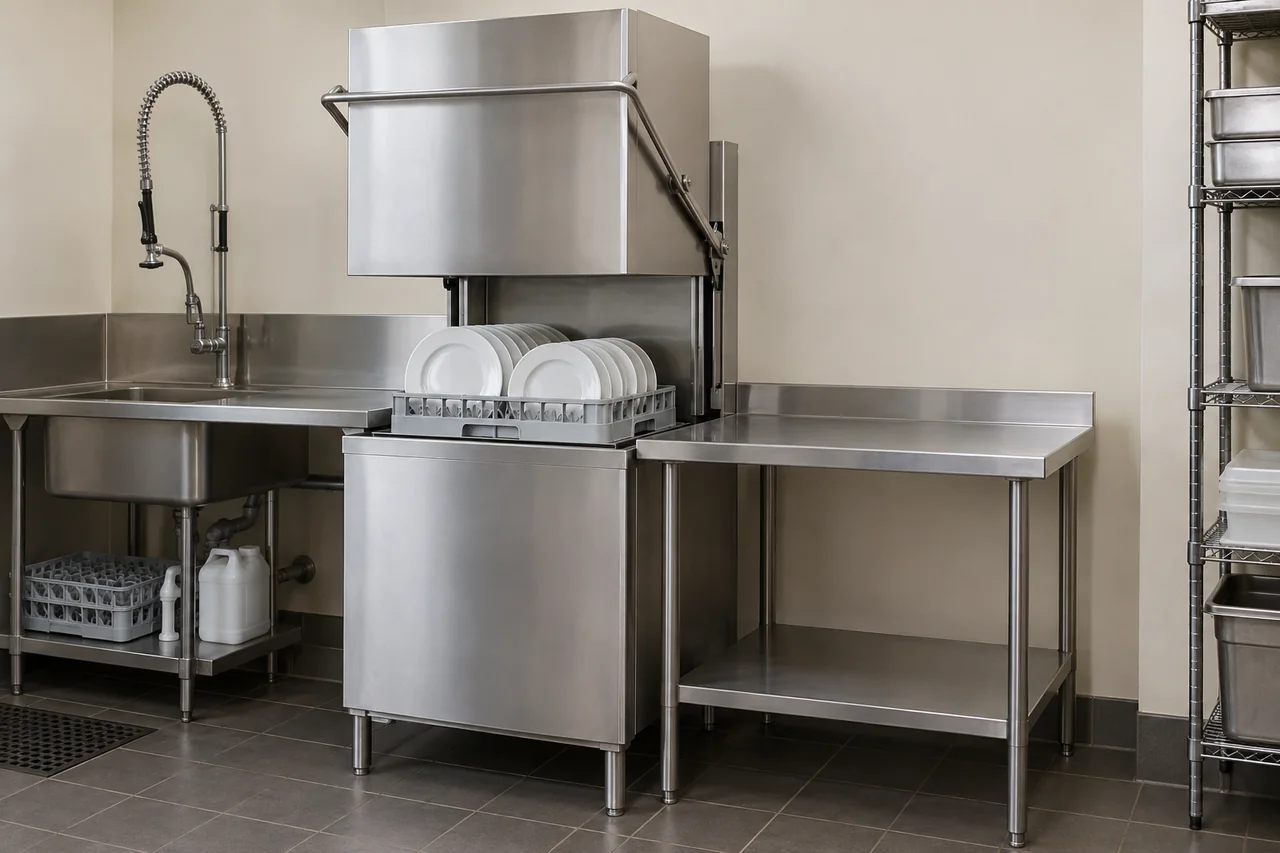
Identify the dishwasher and the failed cycle stage
Tell us whether the machine is undercounter, hood or pass-through. Include a photo of the model label and the displayed warning. Describe whether the fault happens during filling, washing, rinsing or draining. A kitchen with more than one machine should identify the affected unit so the visit can be planned correctly.
Record what you can see without removing covers. Tell us about recent plumbing, supply, chemical or maintenance changes. Connected dosing equipment and its maintenance provider should be identified before any settings are changed.
Poor washing and rinse or temperature warnings
Report the exact message and any displayed temperatures. Say whether the problem affects every rack or only certain loads. The technician needs to check the reported fault against the equipment's instructions before recommending a part or adjustment.
Appliance repair does not replace your kitchen's hygiene controls. Keep the responsible kitchen manager involved in the inspection and any return-to-use decision. Leave chemical dosing and internal electrical work to the people responsible for that equipment.
Drainage, filling and leaks
Describe where water first appears and at which cycle stage. Note whether the machine fills slowly, retains water after draining or stops with a warning. Avoid assuming that a pump needs replacement from standing water alone.
Tell the team about accessible supply and drainage connections. If the leak affects other equipment or creates a wet work area, stop using the affected machine and follow your site's safety procedure. Share the observations when requesting the visit.
Plan access around your kitchen's work
Provide the site address, a contact person, delivery or loading access and any reception requirements. Tell us when the dishwasher is normally in use and when an inspection can take place. A requested visit window is confirmed after the team checks availability; it is not a guaranteed emergency response.
For faults involving several appliances, describe each item separately through our commercial appliance repair service. Refrigeration and beverage equipment have separate commercial freezer and commercial coffee machine service pages.
Agree the work and the return-to-use checks
Ask for the inspection findings, proposed work, parts availability and expected next steps. Confirm labour, parts, any repeat attendance and the full amount before approving the repair. Our pricing guide explains the questions to ask. Maintenance, chemical supply and unrelated plumbing are not automatically included.
Agree which functional checks will be completed after the repair. Your kitchen manager remains responsible for the business's operating and hygiene procedures. Keep the written job details and agreed service terms. For a household machine, use our home dishwasher repair page.